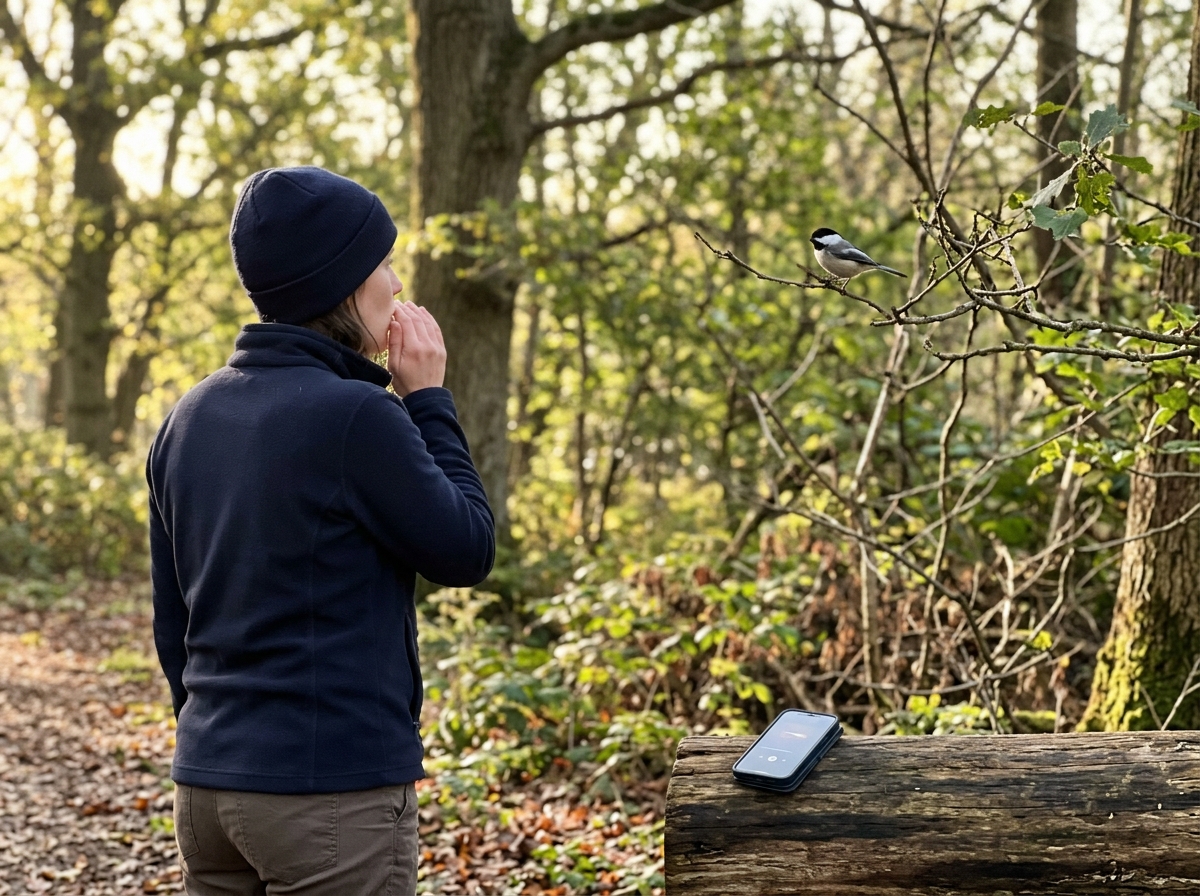
You can make convincing bird chirping noises using nothing but your voice, breath, and mouth position. No special equipment required to start. The key is understanding that a bird chirp is not a random sound but a precise combination of pitch, duration, rhythm, and natural pauses. Once you break it down into those four ingredients and drill each one separately, realistic-sounding chirps come together faster than most people expect.
How to Make Bird Chirping Noises: Voice Drills

Marcus Hendricks
23 Mar 2026
Mimic vs. record: pick your goal first
Before you practice a single chirp, decide what you actually want to do. There are two distinct goals here, and they require different approaches. The first is vocal mimicry: you want to produce chirping sounds yourself using your voice and breath. The second is recording and playback: you capture real bird sounds and play them back. Both are valid, but this guide is focused on how to do a bird call easy (vocal mimicry), because that is the skill most people want when they search for how to make bird chirping noises. how to ring a bird. how to do different bird calls
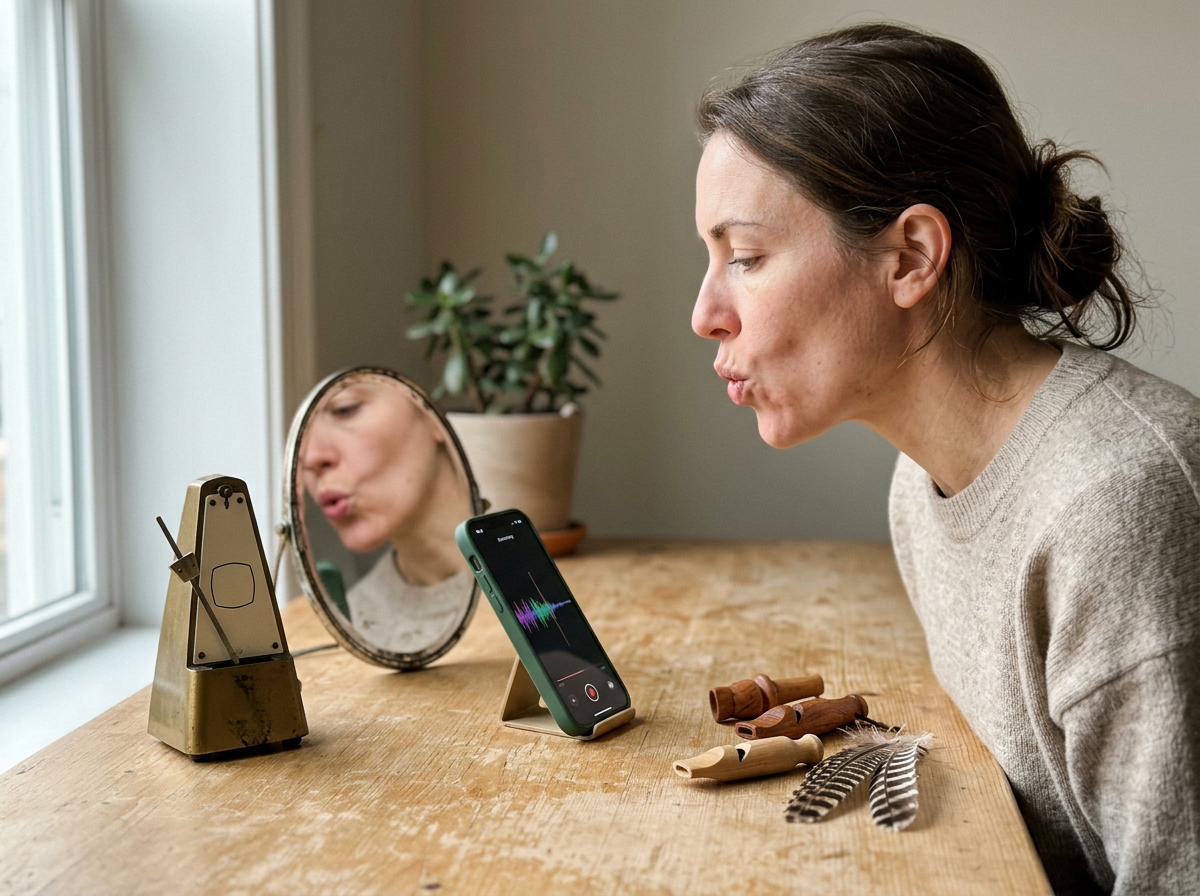
That said, recording is a useful training tool alongside vocal practice. You can record yourself and compare your output to a reference bird call, which is covered in the tools section below. The important thing is to be clear with yourself about the end goal: are you trying to produce the sound with your own body, or are you trying to attract or communicate with real birds using playback? The ethical implications of those two goals are very different, and the safety section at the end covers that directly.
The basic mechanics: breath, mouth shape, and tongue

Bird chirps are produced by controlling airflow through a shaped aperture. Your mouth is that aperture. The three physical variables you are controlling at all times are: how much air you push (breath pressure), what shape your mouth and lips form (the resonant cavity), and where your tongue sits (which filters and colors the sound). Getting these three things right is everything.
Breath pressure
Most beginners push too much air. Real bird chirps are short, bright, and controlled. Practice breathing from your diaphragm and learning to release small, precise puffs of air rather than steady streams. Think of it less like blowing and more like a quick, contained exhale. A good starting exercise: put your hand flat in front of your mouth and try to move it with a single short puff, then stop, this is a simple way to start learning how to make a swallow bird call. That controlled burst is the breath you want behind each chirp.
Mouth shape and lip position
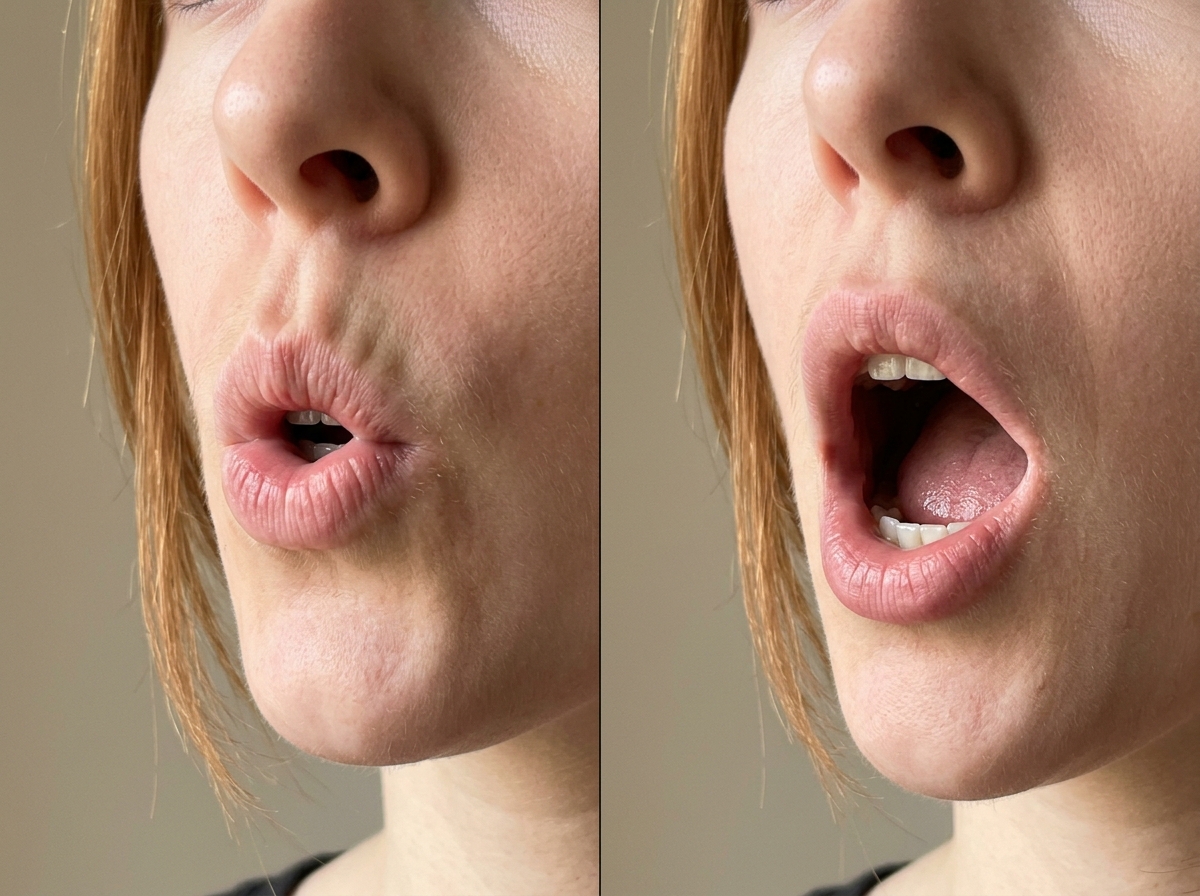
Higher-pitched chirps (think sparrow or wren) require a smaller mouth opening, with lips slightly pursed. Lower, rounder calls (like a dove coo) need a more open, rounded mouth. Start with a small, slightly pursed opening, as if you are about to whistle but have not committed to it yet. Adjust the size of that opening in tiny increments and notice how the pitch shifts. You are essentially tuning a resonant cavity, so every millimeter matters.
Tongue placement
The tongue is your most underused tool. Placing the tip lightly behind your upper front teeth while the back of your tongue is raised gives a bright, crisp sound. Dropping the tongue flat lowers the pitch and softens the tone. Many chirp sounds involve a very subtle flick of the tongue against the roof of the mouth or the back of the teeth to create the slight attack at the start of each note. Practice that flick in isolation before adding breath and mouth shape.
Practice drills for pitch, rhythm, and spacing

The biggest mistake people make is trying to sound like a bird immediately. Instead, isolate each variable and drill it until it feels automatic. Run through these drills in order, then work them into turning single chirps into recognizable patterns for the full how to make a bird caller workflow.
- Pitch ladder drill: Produce a single short chirp. Then try to produce the exact same chirp but one noticeable step higher, then one step lower than the original. Do ten repetitions of each. The goal is not to hit specific musical notes but to develop conscious control over pitch direction.
- Duration drill: Set a timer for 30 seconds. Produce chirps that are each exactly one beat long (count silently: one-and, two-and). Then halve the duration and repeat. Short, clipped chirps are harder to control than long ones, so start slow and compress.
- Spacing drill: Chirps are rarely continuous. Most birds have precise gaps between notes. Practice producing two chirps with a one-second gap, then a half-second gap, then a quarter-second gap. Use a metronome app (any free one works) set to 60 bpm to keep spacing honest.
- Pitch-slide drill: Some chirps glide upward or downward in pitch within a single note. Practice starting a chirp at a lower pitch and sliding up to a higher one in a single breath burst, then reverse it. This is the hallmark of many finch and warbler sounds.
- Rhythm pattern drill: Pick a simple pattern (two short chirps, pause, one long chirp) and repeat it ten times without variation. Only when you can nail it consistently should you move on to more complex patterns.
Turning single chirps into recognizable patterns
Once you can produce a controlled single chirp, the next step is stringing them into the patterns that make a sound recognizable as a specific bird. Different common birds have distinct rhythmic signatures that are actually not that hard to learn.
| Bird Type | Rhythm Pattern | Pitch Character | Key Technique |
|---|---|---|---|
| House sparrow | Short-short-short repeated in bursts | Mid-range, slightly raspy | Keep the mouth small, use a slight tongue flick on each note |
| American robin | Flowing phrases, rising and falling | Rich, full, musical | Open mouth slightly wider, let phrases last 1-2 seconds each |
| Black-capped chickadee | Two-note whistle, second note lower | Clear and bright | Pitch-slide drill downward on the second note |
| Northern cardinal | Series of clear whistles, then a trill | High and pure | Pursed lips, high breath pressure on the trill |
| Mourning dove | Four-note coo, last note longest | Low, breathy, mournful | Drop the tongue flat, very open mouth, minimal breath pressure |
When working on any of these, listen to the actual bird call first (free recordings are available on sites like the Cornell Lab's Macaulay Library). Listen at least five times without attempting to mimic. Then try to reproduce just the rhythm by tapping on a table before you make any sound. Only after the rhythm is in your hands should you add the vocal element.
Tools that speed up your progress
You do not need expensive gear, but a few free tools make a real difference, especially for self-correction.
Recording and visual analysis
Record your chirps using your phone and then listen back immediately. Your ear hears your own voice differently in real time than it does on playback. Audacity is a free desktop app that lets you view your recordings both as a waveform and as a spectrogram. The spectrogram view shows you how the energy in different frequency bands changes over time, which is exactly what you need to compare your chirp's pitch arc against the reference bird call. Audacity's Pitch (EAC) spectrogram mode highlights the fundamental frequency contour, so you can literally see whether your pitch is sliding the right way.
If you want to go deeper, Cornell Lab's Raven Lite is free and displays waveform, spectrogram, and spectrogram slice views in real time, even while you are recording. It also organizes your sounds into a spreadsheet-like selection table, which is handy for comparing multiple chirp attempts side by side. Another tool worth knowing is BirdNET-Analyzer (also from Cornell Lab), which can analyze recordings and identify bird sounds. You can run your own chirp imitation through it as a rough accuracy check: if the analyzer is uncertain or identifies your chirp as a completely unrelated bird, you know your pattern or pitch needs work.
Timing and rhythm aids
A metronome app is more useful for this than most people realize. Set it to a low BPM (60 is a good starting point) and treat each beat as one chirp. Once your chirps are landing reliably on the beat, start practicing the gaps by chirping on beat one and three only, or on the 'and' subdivisions. Free metronome apps for both iOS and Android work perfectly well for this purpose. You do not need anything fancier.
Fixing the most common problems
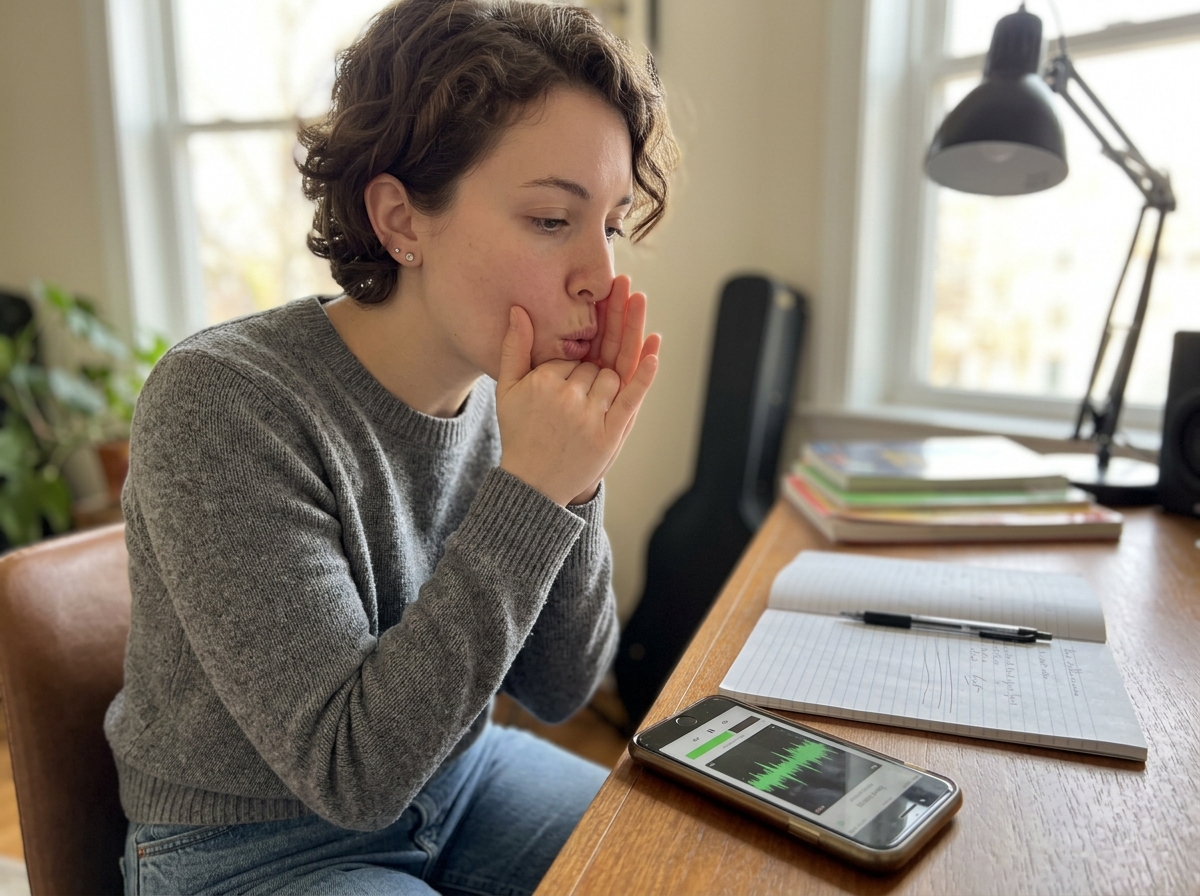
Most people hit the same handful of issues. Here is a direct troubleshooting checklist:
- Too loud or harsh: You are using too much breath pressure. Back off the air volume and focus on the resonance of the mouth cavity doing the work rather than raw airflow.
- Pitch is flat or dull: Your mouth opening is probably too wide. Purse the lips slightly more and raise the back of the tongue toward the roof of the mouth.
- Chirps sound wobbly or inconsistent: This is usually a tension problem in the throat or jaw. Drop your jaw slightly, relax the throat, and let the tongue and lips do the shaping instead.
- Rhythm feels off or rushed: You are not pausing long enough between chirps. Use the metronome drill and consciously count the gap. Real bird calls have more silence in them than beginners expect.
- Can not hold a consistent pitch: Practice the pitch ladder drill daily for one week before attempting patterns. Pitch control is a muscle-memory skill and needs repetition before it becomes reliable.
- Sound is too human or vowel-like: You are letting your vocal cords produce too much of the sound. Try producing the sound with minimal or no vocal cord vibration (more of a whispered or fricative sound), relying on breath and mouth shape instead.
- Timing within a phrase collapses at speed: Slow everything down by 50 percent. Speed is the last thing you add, not the first. Nail the pattern slowly, then gradually increase tempo over multiple sessions.
Safety and ethics: keeping birds safe while you practice
If your imitation is good enough to actually attract birds, you need to think carefully about how and where you use it. The American Birding Association's Code of Birding Ethics is direct on this point: limit the use of audio methods for attracting birds, especially in heavily birded areas and especially for species that are threatened, endangered, or rare in your region. Vermont Fish and Wildlife endorses the same guidance.
The reason matters. When a bird hears what sounds like a rival or a distressed member of its species, it responds by approaching, becoming agitated, and sometimes abandoning normal activities like feeding, nesting, or caring for young. High Country Audubon's playback guidelines note that audio playback may cause birds to become agitated, which is a real welfare concern during breeding season especially. Even if you are imitating rather than playing back a recording, a convincing imitation carries the same risk if the bird responds to it.
A few practical rules to follow when you practice outdoors:
- Practice indoors or in areas without birds nearby when you are drilling mechanics. You do not need an audience of actual birds for the learning phase.
- Never use your imitation repeatedly near an active nest. The stress response is real and the bird cannot tell the difference between a real threat and your practice session.
- Do not use imitation to attract rare, threatened, or endangered species. If you are unsure of a species' status in your area, assume caution.
- In popular birding spots, trails, and nature reserves, keep vocal practice minimal or silent. Other birders are there for the real birds, not your rehearsal.
- Avoid using convincing imitations near roads, windows, or other hazards that could put a responding bird at physical risk.
None of this means you cannot practice. It just means practice thoughtfully. Indoors with a recording setup is the ideal environment for the drilling phase. Once you want to test your skills in a real outdoor setting, choose a location with abundant, common, non-stressed bird populations and keep it short.
Your practical starting routine
Here is a concrete daily routine to get from zero to recognizable chirps within two to three weeks of consistent practice. Do this indoors, recorded, with a metronome running.
- Week 1, Days 1-3: Spend 10 minutes a day only on breath control. Practice the short controlled puff drill. Record yourself and listen back. No chirp sounds yet, just controlled air bursts.
- Week 1, Days 4-7: Add mouth shape and tongue position. Produce a single sustained chirp-like tone using a pursed lip position and tongue behind upper teeth. Aim for consistency, not beauty. Record every session.
- Week 2: Run the pitch ladder and duration drills daily (10 minutes). Add the spacing drill using a metronome. Listen to your recordings and compare them to a reference call you have chosen.
- Week 3: Pick one bird pattern from the table above (house sparrow rhythm is easiest to start). Use the tap-on-table method first, then add voice. Record, compare to reference, adjust.
- Ongoing: Add the pitch-slide drill and work toward a second bird pattern. Open Audacity and look at your spectrogram. Is your pitch arc going in the right direction compared to the reference? That visual feedback accelerates improvement faster than listening alone.
The honest benchmark for knowing whether your chirps sound right: play your recording to someone who was not in the room and ask them what it sounds like, without prompting. If they say 'some kind of bird' without hesitation, you are there. If they say 'you sneezing,' go back to the breath and pitch drills. Recording and comparing against that honest external reaction is the fastest feedback loop available to you.
FAQ
How can I make bird chirping noises if I cannot whistle or control my breath well yet?
Start with a “silent prep” drill, shape your mouth for the chirp and place your tongue position, then do a few very small breath releases without sound (you should feel a contained exhale). Add sound only after the airflow burst is consistent, this avoids pushing steady air and makes the chirp shorter and brighter.
Why do my chirps sound like squeaks or clicks instead of notes?
That usually means either the tongue is too forceful (creating a click) or the mouth aperture is too small for the breath pressure. Reduce breath pressure by about half, then keep the tongue tip light behind the upper teeth, aim for a gentle attack at the start rather than a hard tongue release.
Should I practice with my mouth slightly open or almost closed?
Use a “just barely committed” posture first, like you are about to whistle but stop early. Then adjust in tiny increments, for higher notes close the aperture slightly, for rounder tones open it more, pitch changes often come from small mouth-opening differences rather than big tongue moves.
How do I know whether I’m getting the timing right, not just the pitch?
Tap the rhythm first (no sound), then record only when you tap is accurate. If your recording sounds off to others, try metronome practice on just one or two subdivisions for a day, timing drift is often the real issue even when pitch looks “close.”
What is the quickest way to make my chirps shorter instead of sustained?
Think “burst then stop.” Practice exhaling for a fraction of a second and immediately resealing the airflow (stop the breath on purpose). If you keep air moving after the note, you will hear a tail or a sustained hiss, which most bird calls do not have.
How loud should I be when practicing indoors or outdoors?
Indoors, keep it moderate since you are listening to details like pitch arc and timing. Outdoors, if you are near other people or sensitive areas, keep sessions brief and avoid continuous calling, because prolonged calling increases stress for local birds even if you are using only imitation.
Can I use a phone recording to check accuracy, or do I need spectrogram tools?
You can start with phone playback alone, especially for rhythm, but for pitch you will often benefit from a visual tool like a spectrogram or pitch contour view. A common mistake is “feels close” bias, where you sound acceptable to yourself but your pitch slides too much on playback.
Why does my chirp sound different when I record it compared to how it feels while I do it?
Your body and jaw vibrate differently than a microphone picks up, and real-time feedback is filtered by bone conduction. That’s why immediate listen-back matters, and why comparing your recording’s pitch contour to a reference is more reliable than trusting sensation.
How should I position my tongue for bright chirps versus softer ones?
For brighter notes, keep the tip lightly behind the upper front teeth with a raised tongue back, then use a subtle tongue flick for the note attack. For softer, lower sounds, drop the tongue flatter and open the mouth slightly, you should hear the note round out rather than sharpen.
What if BirdNET-Analyzer says it identifies the wrong bird?
Treat it as a rough sanity check, not a final judge. If it is consistently confused, focus on isolating one variable at a time (breath burst length, mouth opening size, tongue attack) and test a single improved chirp against the same reference pattern again.
When should I stop practicing a specific chirp pattern and switch drills?
Stop when improvements plateau for a few days at the same metronome speed. Then switch to the weak component, for example if rhythm is stable but pitch slides, revisit mouth aperture tuning and tongue placement with single-chirp drills before rebuilding patterns.
Is it safe or ethical to practice outdoors with playback or convincing imitations?
If you are trying to attract birds, limit the time, avoid heavily birded areas, and skip practice for species that are threatened or rare locally. Also be cautious during breeding season, a bird’s agitation or approach can indicate welfare impact, so end the session immediately if birds change behavior noticeably.
Next Article
How to Do an Easy Bird Call: Step-by-Step Practice
Step-by-step easy bird call practice for beginners: pick a simple sound, drill pitch rhythm and breath, improve fast by