Making a convincing swallow bird call comes down to two things: knowing exactly which swallow you're copying, and then nailing its specific pitch, rhythm, and repeat pattern. Swallows are not one-size-fits-all. A Barn Swallow sounds completely different from a Cliff Swallow or a Northern Rough-winged Swallow, so before you even open your mouth, you need to pin down the species. Once you do that, the steps to imitate it are very learnable, even for a total beginner.
How to Make a Swallow Bird Call: Beginner Guide

Marcus Hendricks
23 Mar 2026
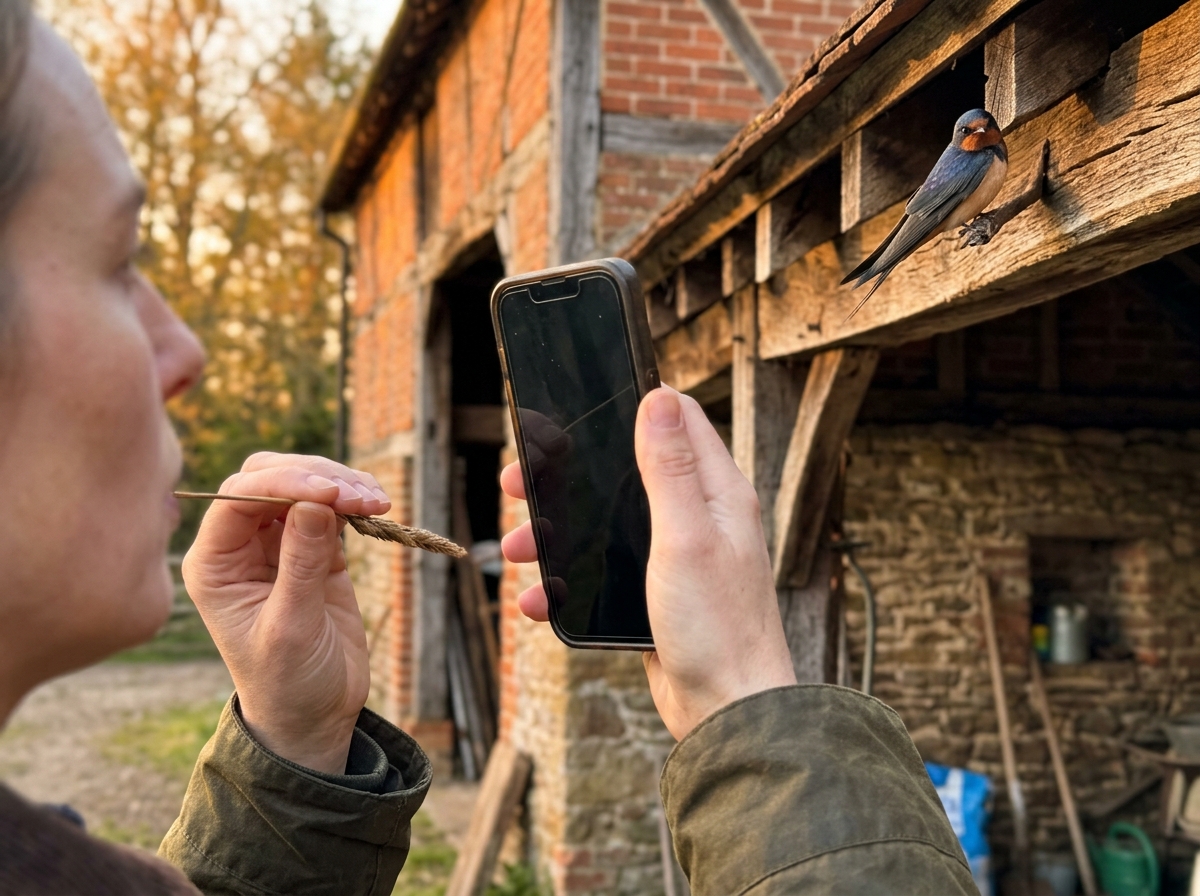
Which swallow are you actually trying to copy?

This is the step most beginners skip, and it's the reason their call sounds wrong from the start. "Swallow" covers a whole family of birds, and each species has a distinct vocabulary. Here are the four you're most likely to encounter in North America and Europe, along with their signature sounds.
| Species | Common Call | Sound Description | Difficulty to Imitate |
|---|---|---|---|
| Barn Swallow | Contact call | Clear "witt-witt-witt" | Beginner-friendly |
| Barn Swallow | Song/courtship | Twitter-warble + rapid mechanical whirrs | Intermediate |
| Cliff Swallow | Chur call | Soft, low "chur" | Beginner-friendly |
| Cliff Swallow | Twitter-squeak song | Guttural gratings, up to ~6 seconds | Intermediate |
| Northern Rough-winged Swallow | Flight call | Low, buzzy, slightly rising "bjjeet" | Intermediate |
| Bank Swallow | Contact call | Low, squeaky "zzrit" or "churt" | Beginner-friendly |
| Common House Martin | Contact call | Hard "prrt" or plaintive "pri-pit" | Beginner-friendly |
If you're just getting started, I'd strongly recommend targeting the Barn Swallow contact call ("witt-witt-witt") or the Cliff Swallow "chur." Both are short, clear, and forgiving enough that you can actually hear yourself improving session to session. The Barn Swallow is also one of the most widespread swallows on Earth, which means you have a good chance of testing your call on real birds wherever you are.
A quick note on call types
Within each species, there are multiple call types: contact calls ("I'm here, where are you?"), alarm calls (triggered by predators), begging calls (used by chicks), and full courtship songs. For most hobbyists, the contact call is what you want. It's the one birds respond to most naturally, and it's the easiest to reproduce without sounding like a threat or a distress signal.
Pick your gear and set up your practice space
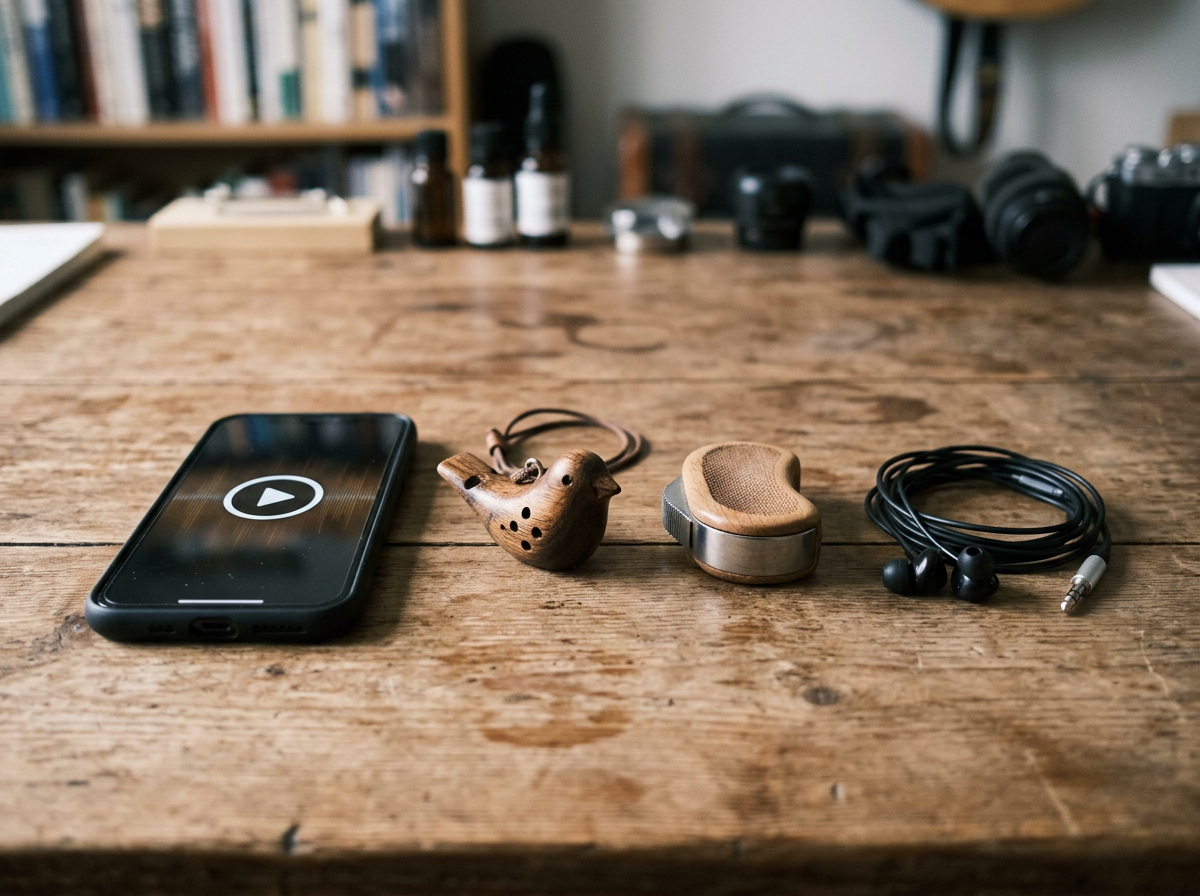
You have a few options for making a swallow call, and the right one depends on your goal. Are you trying to learn to do it by mouth (the most rewarding), or do you want a reliable sound quickly for wildlife observation?
Your options compared
| Method | Best For | Cost | Learning Curve | Realism |
|---|---|---|---|---|
| Mouth/voice only | Long-term skill, any situation | Free | Moderate | High when mastered |
| Bird whistle/hand call | Quick reliable sound, beginners | Low ($5-$20) | Low | Medium |
| Recorded playback (phone/speaker) | Observation, testing your ear | Free-Low | Very Low | Very High |
| Combination (voice + playback to train) | Building accuracy fast | Low | Low-Moderate | High |
My honest recommendation: start with recorded playback to train your ear, then switch to mouth imitation as your main practice method. Use a whistle or hand call if you want a backup tool for field use. If you want to explore hand-based techniques further, there's a related guide on how to make bird calls with hands that covers the mechanics in detail, after you learn how to ring a bird by mouth.
Setting up your practice space
- Use a quiet indoor space for your first 5 to 10 sessions. Outdoor background noise makes it hard to hear your own mistakes.
- Keep a recording of the real call playing from your phone. Use free apps like Merlin (Cornell Lab) or Xeno-canto to find high-quality recordings of your target species.
- Record yourself on your phone every session. You cannot objectively hear your own voice in real time, but a recording reveals everything.
- Practice in front of a mirror at first. Watching your mouth shape helps you understand what's happening physically.
- Aim for 10 to 15 minutes of focused practice, not marathon sessions. Swallow calls are short and repetitive, so your ear fatigues fast.
How to make the basic swallow call by mouth
These steps use the Barn Swallow contact call ("witt-witt-witt") as the primary example because it's the most learnable starting point. I'll note where the Cliff Swallow or other species differ.
Step-by-step: the Barn Swallow "witt-witt-witt"
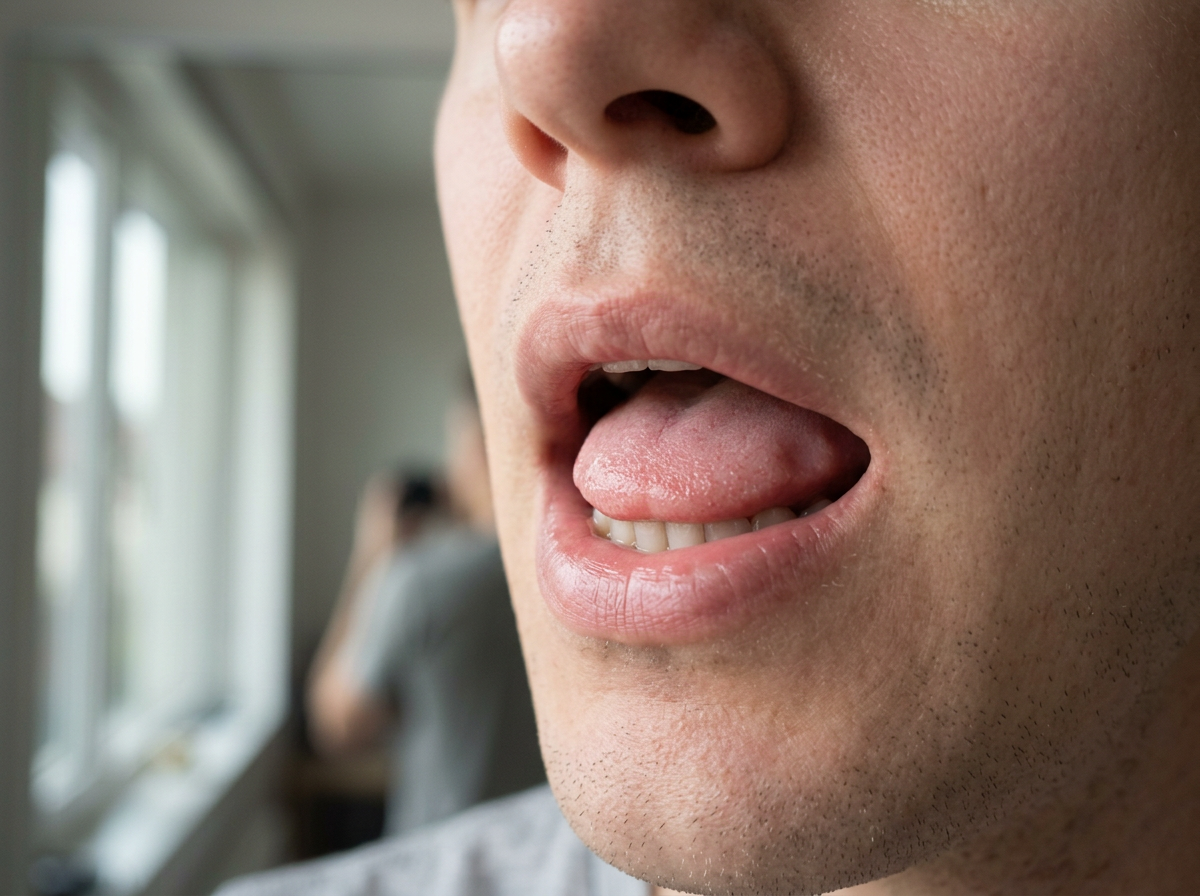
- Start with your mouth slightly open and your lips relaxed, not pursed. You're going for a crisp, short consonant sound, not a whistle.
- Place the tip of your tongue lightly against the back of your upper front teeth (like you're about to say the letter "W" into a "T" sound).
- Push a short burst of air out and say "witt" in a flat, clear tone, roughly in the middle of your vocal register, not falsetto and not chest-deep. Think of it as the pitch you'd use to say "sit" in a normal conversation.
- The note should be very short, about a quarter of a second. If it sounds like "wiiiit," you're holding it too long. Clip it.
- Repeat in a quick, even series: "witt-witt-witt." Leave a tiny, equal gap between each note, roughly half a second between calls. The rhythm is consistent, almost like a metronome.
- The overall pitch is bright and slightly rising on each note, then drops back to baseline. Think of a very subtle upward flick at the end of each "witt."
- Aim for two to five repetitions in a row, then pause. Real Barn Swallows don't chatter endlessly; they call in short clusters.
Adjustments for other swallow species
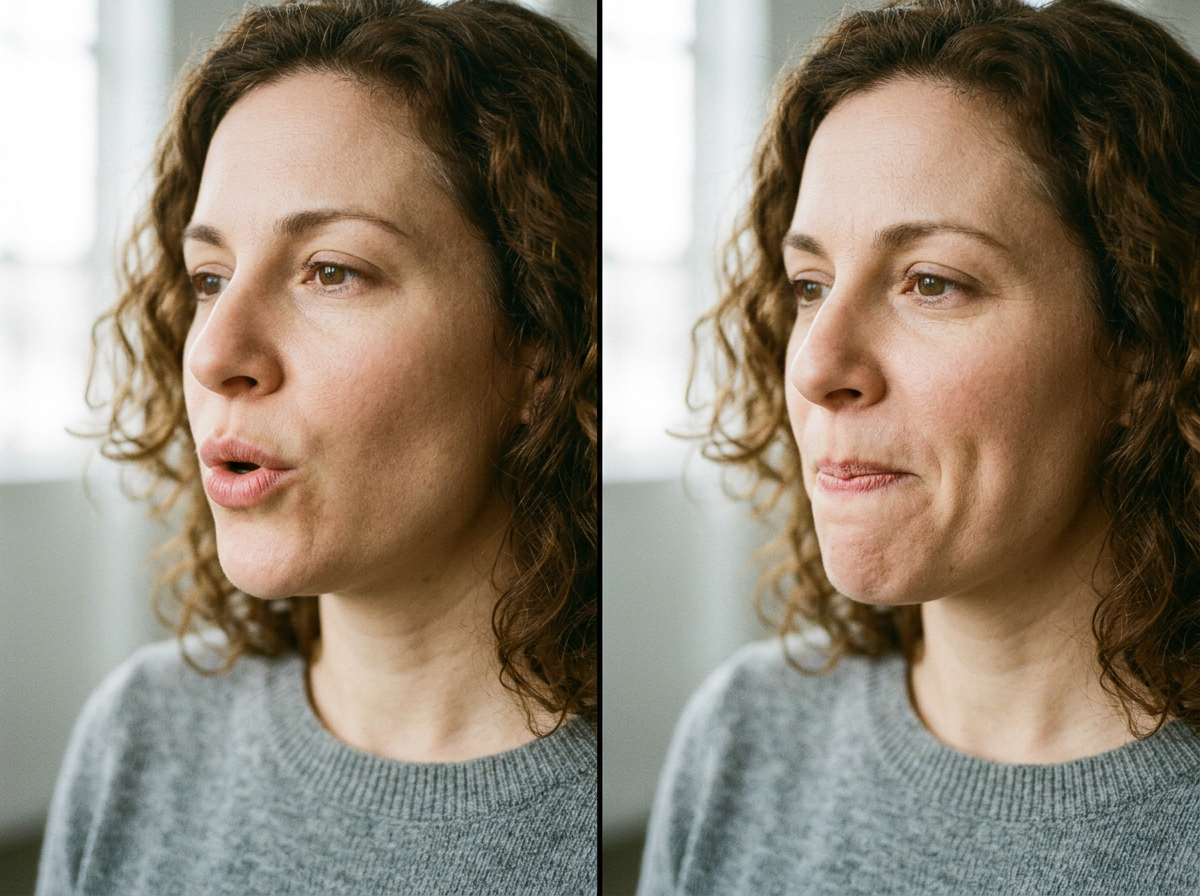
For the Cliff Swallow "chur," close your lips slightly more and use a rolled, nasal quality in your throat. Think of a very soft, short "ch" followed by a brief uvular (back-of-throat) rumble. It's quieter and rounder than the Barn Swallow's crisp "witt." For the Northern Rough-winged Swallow's "bjjeet," add a slight buzzy vibration to your lips as you push air through, and let the pitch rise slightly at the very end of the note. For the Bank Swallow's "zzrit" or "churt," add friction to the initial consonant by barely touching your upper teeth to your lower lip, almost like the start of a "z" sound.
Common House Martin calls for a short, hard stop on the "prrt" version. You almost spit the sound rather than singing it. For the "pri-pit" version, there are two distinct syllables with the second one slightly lower in pitch, like a question answered immediately.
Adding accuracy: trills, repeats, and distance calls
Once your basic call sounds clean, you can layer in natural variation. Real swallows aren't monotone robots, and a call that never changes actually sounds less believable to other birds (and other birders).
Repeats and clustering
In natural settings, swallows often cluster their calls in groups of two to five, with a slightly longer pause between clusters than between individual notes. Practice this pattern: three quick "witt" notes, a one-second pause, then two more, then silence for two to three seconds. This mimics the conversational rhythm of real contact calls much better than a steady stream.
Trills and the courtship warble
The Barn Swallow's courtship song adds a twitter-warble into the mix, followed by what researchers describe as rapid, mechanical-sounding whirrs. To approximate the whirr, flutter your tongue rapidly against the roof of your mouth while exhaling a thin stream of air. It should sound almost like a very fast trill. Don't worry about matching it perfectly at first; the contact call is the workhorse, and the whirr is advanced territory. Similarly, the Cliff Swallow's twitter-squeak song runs up to about six seconds and combines guttural gratings in quick succession. Practice building up from two seconds to four seconds of continuous, varied sound without running out of breath.
Distance calls
When swallows call at long distance, the calls become slightly louder and the gaps between notes widen a little, as if the bird is waiting for an echo or a response. You can simulate this by increasing your volume by about 20 percent and stretching the pause between each "witt" from half a second to about a full second. Don't yell, though. Swallow calls are naturally high and carry well on their own. Forcing volume usually distorts the tone more than it helps.
When something sounds off: common problems and fixes
The tone sounds weak or airy
This usually means you're not pushing enough air through on each note. The Barn Swallow contact call should feel almost percussive, like a short tap of air rather than a sustained breath. Try making the "witt" sound feel more like a short cough than a sustained note. If your tone is consistently thin and breathy, try placing your tongue a little further forward on the roof of your mouth and tensing the back of your throat slightly.
The pitch is too low or too high
Play the real recording and try to match it by humming first, then adding the consonant. Most beginners go too low because they're subconsciously trying to project. Swallow calls sit in a higher register than feels natural for the human voice. If you're consistently too high (sounds squeaky), relax your throat more. Too low (sounds hollow), try tensing the throat slightly and shaping your mouth into a slightly smaller oval.
The timing is inconsistent
Use a metronome app on your phone. Set it to about 80 beats per minute and practice hitting one "witt" every beat. Once that feels locked in, try two beats per note (slowing down), and then half a beat per note (speeding up). This trains your internal rhythm so the spacing feels automatic outdoors when you're distracted by actually looking at birds.
No response from real birds
This is the most frustrating moment, and I've been there. A few things could be happening. First, the birds may simply not be in the area in numbers. Swallows are seasonal and highly mobile. Second, your call might sound close but not quite right, and birds are better at detecting fakes than we expect. Third, you might be using the wrong call type for the situation. An alarm-like pattern (fast, frantic repeats) will scatter birds, not attract them. Stick to the slow, calm contact rhythm. Finally, timing in the day matters: swallows are most vocal and responsive during early morning and just before dusk.
The call sounds unnatural even to you
Record yourself and compare it directly to the real call by playing them back to back. Nine times out of ten, the issue is either note length (too long), pitch (too low), or the gap between notes (too even or too wide). Fix one variable at a time. Don't try to correct everything in a single session, or you'll lose track of what's actually working.
Build a practice routine that actually gets results
Consistent short sessions beat occasional long ones every time with bird call imitation. Here's a simple weekly structure that works well for beginners.
- Days 1 to 3: Listen to your target call recording five times in a row, then try to reproduce it from memory. Record yourself each time. Don't listen back until the end of the session.
- Day 4: Compare your recordings side by side with the real call. Write down (or voice-note) one specific thing that sounds different. That's your focus for the next session.
- Days 5 to 6: Practice with the corrected element in mind, still recording each attempt.
- Day 7: Take your practice outside to a natural setting where swallows have been spotted. Use the contact call only, in short clusters of three to five notes, and then wait at least 30 seconds before calling again.
Testing your call outdoors, the right way
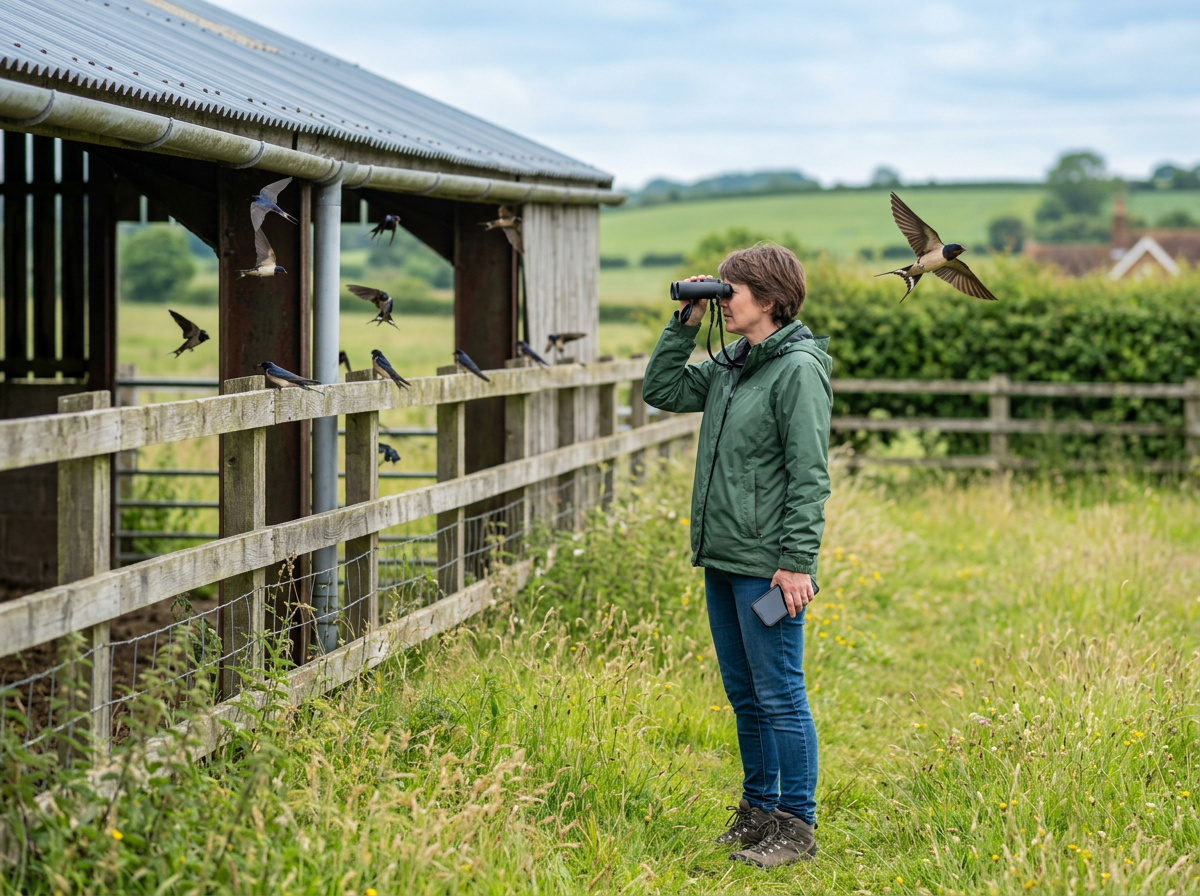
Testing in the field is exciting, but it comes with some responsibility. The goal is to observe a response, not to agitate or stress birds. Here's how to do it ethically and get useful feedback at the same time.
- Find a spot where swallows are already present or actively foraging. Don't try to "call in" birds from a completely empty area.
- Use your mouth call or a whistle, not playback from a speaker, as your first test. Speakers at full volume can overstimulate birds and disrupt natural behavior.
- Call in short series (three notes, then stop), then observe for 30 to 60 seconds. Signs of a response: a swallow breaks from its flight path and moves toward you, a bird calls back, or nearby birds pause and orient in your direction.
- If you use recorded playback to test your ear in the field, keep the volume low (conversational level, not loud), limit playback to two or three short sessions of under 30 seconds each, and stop immediately if birds show signs of agitation (alarm calling, clustering above your position, or flushing repeatedly).
- Never use playback near active nests during breeding season. Barn Swallow alarm calls are known to flush adults from nests and set them circling above a predator. You don't want to trigger that response unnecessarily.
- A successful test looks like: a swallow or two showing interest, slowing down overhead, or calling back. You don't need a swarm; a single curious bird is a genuine win.
If you want to keep building on this skill, it's worth exploring [how to make bird sounds with your mouth and hands](/identify-bird-songs/how-to-make-bird-sounds-with-your-mouth-and-hands) more broadly, since some of the breath control and lip-shaping techniques transfer across species. There are also guides on how to do a bird call easy if you want simpler starting points, and [how to do different bird calls](/identify-bird-songs/how-to-do-different-bird-calls) when you're ready to expand your repertoire beyond swallows.
The honest truth is that getting a swallow call to sound genuinely convincing takes a few weeks of regular practice, not a single afternoon. But the contact call, especially the Barn Swallow's "witt-witt-witt," is achievable faster than most people expect. Focus on the right species, nail the pitch and clip the note length, keep your rhythm steady, and record yourself constantly. Those four habits will get you further than any trick or technique shortcut. how to make bird chirping noises
FAQ
How loud should I be when practicing, and when should I avoid calling at all?
Practice quietly at home first, aiming for clarity rather than volume. In the field, stop calling if birds become agitated, start alarm behavior, repeatedly circle and approach aggressively, or you see other birds flush from the area. Even the contact rhythm can become disruptive if you overdo it or keep calling after you get no response.
What if I know the species but my “witt” still sounds wrong, is it more likely pitch, timing, or consonant shape?
Use a one-change-at-a-time test. Start by matching note length first (too long is the most common), then adjust pitch by moving your mouth slightly forward and keeping the same rhythm. If pitch and length are right, refine the consonant by recording yourself and comparing the onset, a good swallow contact call has a crisp start and quick cutoff rather than a “breathy note” that fades.
Can I practice swallow calls indoors without bothering people or confusing my ear?
Yes, but choose a room with low echo (carpet, curtains) so the recording reflects your real sound, not the space. Also do short loops, 10 to 20 seconds, then rest your breath and repeat, swallow calls are quick contact notes, overlong practice makes you compensate with more airflow and your sound drifts.
How do I switch between Barn Swallow and Cliff Swallow without losing consistency?
Train them separately with their own metronome settings and your own “target cue.” For example, for Cliff Swallow, keep the call softer and more rounded, and focus on the nasal or back-of-throat rumble feel. Only after you can do one cleanly at slow tempo should you try alternating, otherwise you will blend consonants and the birds may interpret it as a wrong species.
If the birds are far away, should I increase volume or just change the pause timing?
Prefer timing changes over volume. The article’s guidance of slightly longer gaps helps the bird “find” the call, but forcing loudness often distorts the tone. Increase volume only a little, keep the note crisp, and test with a short burst (a few clusters) rather than sustained calling.
How long should I keep calling to check for a response before I stop?
Try brief sequences, about 20 to 40 seconds, then stop and listen for 1 to 2 minutes. Swallows may answer or move silently, if you keep calling through their response window you can mask it and increase the chance of agitation. Use your recorded comparison to improve the next round, not endless repeated trials.
What call type should I avoid if my goal is to attract swallows rather than trigger distress behavior?
Avoid alarm-like patterns such as fast frantic repeats, and avoid anything that sounds like a stressed or harsh distress squeal. Stick to the contact call rhythm in calm clusters. If you are unsure, default to the simplest contact call, it is the least likely to be interpreted as threat or separation distress.
Do I need to learn courtship whirrs and long songs right away?
No, courtship elements are advanced. Focus first on the contact call accuracy and conversational clustering. Only add whirrs after your pitch and cutoff are consistent, because whirrs can tempt you to overblow air and your contact call gets breathier and longer.
Why do my calls seem to work on recording practice but not outdoors?
Outdoors, wind, distance, and your body posture change airflow and how your tongue releases the consonant. Record yourself outside in a quiet spot if possible, or at least once near a window with similar airflow conditions. Also check your timing outdoors with a metronome, many people unconsciously slow down when they stop thinking about rhythm.
Can I use a whistle or hand call, and does it change how I should practice timing?
Yes, but treat the tool as a different instrument. With a hand call or whistle, the note onset and cutoff may be sharper or slower than your mouth, so re-calibrate timing by practicing the same clustering pattern and metronome beats. In other words, do not assume that “my mouth timing is correct,” test the tool’s rhythm separately and record it too.
Next Article
How to Make a Bird Caller: DIY Homemade Call Guide
Step-by-step DIY guide to make a homemade bird caller, choose the right type, test pitch, and use safely.